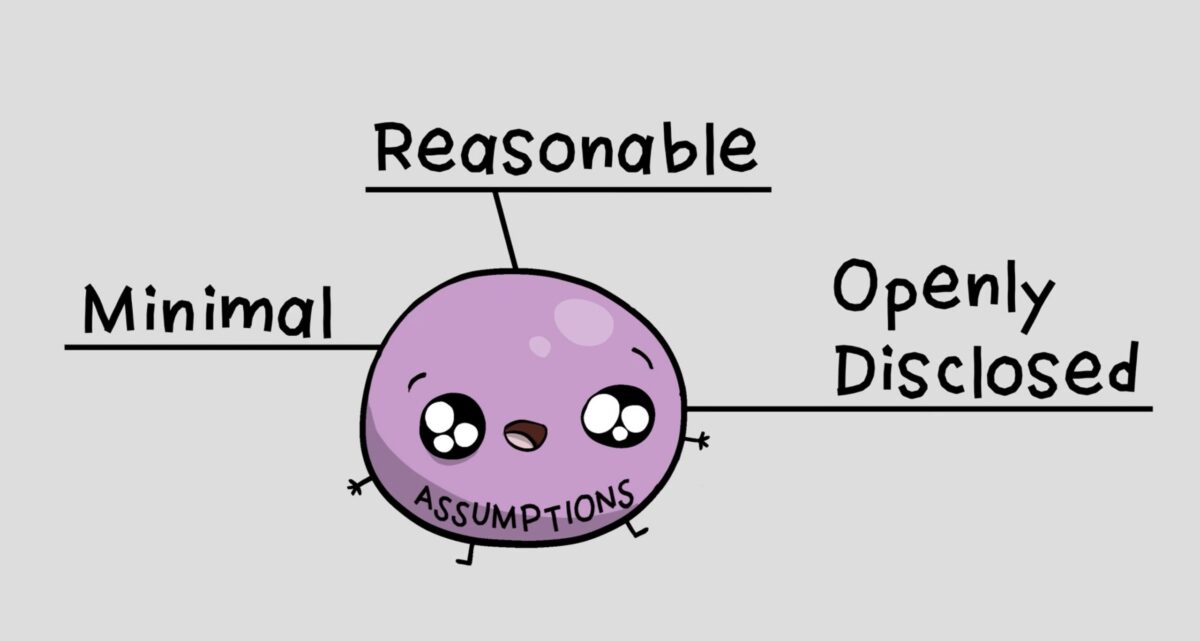
Scientific claims about the origin of life are often complex—so how can you tell if they’re right or wrong? Even if you’re not an expert, there are tell-tale signs to identify scientific claims that are dubious. Are the scientists unbiased? Do they exclude possible explanations before the investigation even begins? Do the scientists make assumptions? Are the claims being made reasonable or exaggerated? It turns out origin of life research regularly makes all these mistakes.
We know that DNA contains information that is vital for life, but our DNA is constantly assaulted by chemical and physical processes, degrading its information content — threatening the ongoing existence of life.
Is the idea of junk DNA one of the biggest mistakes in science in our lifetime? Only about 1% of our DNA codes for proteins, so what is the other 99% doing?
Inside your body a massive amount of encoded information that makes your life possible. Your body also contains sophisticated computer-like hardware that reads this coded information and builds the things you need for a living system.
Can you trust everything you hear about the origin of life? The short answer is “No.” Many popular science expositors overstate the evidence for the natural, chemical origin of life and promote gross misinformation to the public on this topic. This video reviews popular claims made about the origin of life and shows why they are contradicted by the evidence, misleading, or flat out false.
What is life and how did it originate? Many origin of life researchers claim that life started as a primitive self-replicating molecule, and evolved from there into all the complex forms of life we observe. But does the evidence support this? This video reviews obstacles to forming a self-replicating system, challenging the “RNA World” and “RNA-Peptide World” hypotheses and other supposed examples of self-replicating molecules.
Chemical evolution would have required a continuous supply of energy to create the first life. But are the energy sources that have been proposed for chemical evolution realistic?
We’re often told that origin of life experiments have simulated the production of life’s building blocks under conditions that mimicked the early earth. Or at least that’s what many textbooks say. But is this really true? This video deals with one particular challenge to evolving life from chemicals: the challenge of creating biopolymers.
We’re often told that origin of life experiments have simulated the production of life’s building blocks under conditions that mimicked the early earth. Or at least that’s what many textbooks say. But is this really true? This video shows how origin of life researchers “cheat” by using purified chemicals that don’t reproduce actual natural conditions.
It’s true that antibiotics do stop working sometimes, AND antibiotic resistance is a form of evolution. But is this a demonstration of the creative power of Darwinian evolution, or is there something else going on?
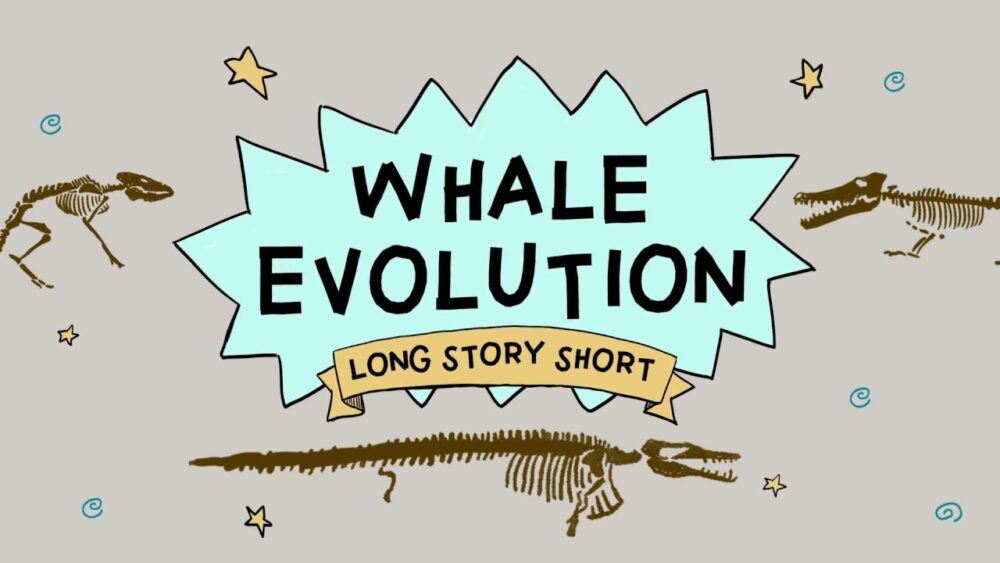
We’re responding to additional critiques to our video on whale evolution. They say that we got some things wrong, but let’s look more closely and see if that’s the case.
This video responds to some critiques to our Long Story Short video on whale evolution. They say that we got some things wrong, but let’s look more closely and see if that’s the case.
Darwinists often point to the whale fossil record as one of the best examples of an evolutionary transition. But is it? Charles Darwin wrote in The Origin of Species: “I can see no difficulty in a race of bears being rendered, by natural selection, more and more aquatic in their structure and habits, with larger and larger mouths, till a creature was produced as monstrous as a whale.” Bears turning into whales? Scientists today disagree, instead claiming that other land animals were the real precursors to today’s whales.
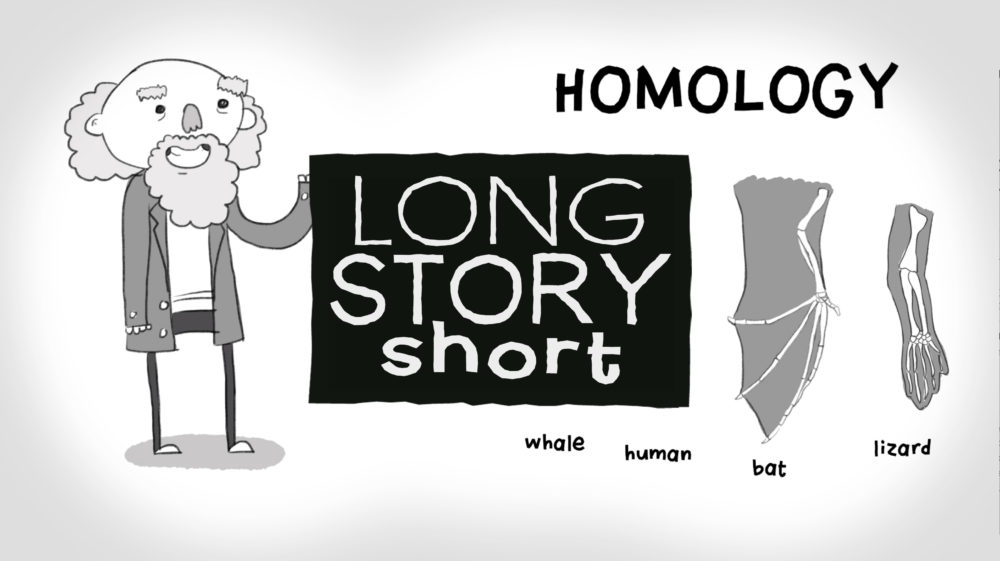
Is homology due to common descent or common design? Is descent with modification overwhelmingly obvious? The standard definition of homology is the similarity of the structure…
We know that DNA contains information that is vital for life, but our DNA is constantly assaulted by chemical and physical processes, degrading its information content — threatening the ongoing existence of life.
Is the idea of junk DNA one of the biggest mistakes in science in our lifetime? Only about 1% of our DNA codes for proteins, so what is the other 99% doing?
New discoveries in biology over recent decades have led to a paradigm shift that now recognizes that the vast majority of our genome isn’t junk, but is functional and plays important cellular roles.
Is homology due to common descent or common design? Is descent with modification overwhelmingly obvious? The standard definition of homology is the similarity of the structure…
The standard definition of homology is the similarity of the position or structure of a biological feature, though not necessarily the function. Common design can explain these similarities just as well as common descent — and in many cases common design is a superior explanation.
Does antibiotic resistance explain new genetic information?
It’s true that antibiotics do stop working sometimes, AND antibiotic resistance is a form of evolution. But is this a demonstration of the creative power of Darwinian evolution, or is there something else going on?
Antibiotic resistance shows small-scale evolution within a species, but it often comes with a fitness cost. It’s a great example that shows Darwinian evolution is a real process in nature, but mutation and selection tend to break features rather than creating something new.
What Viewers Are Saying
These are hands down the best videos on the internet. I am sharing them!!
YouTube Viewer
Your videos are very informative & the humor thrown in is a perfect mixture. Please keep them coming!
YouTube Viewer
I don’t know how you guys come up with such simple but brilliant and often comical analogies. These videos are pure gold.
YouTube Viewer
This is such an accessible and thought-provoking series. Its logic, elegance and intelligent design are breathtaking.
A podcast providing you with the most current news and views on evolution and ID.
A podcast providing you with the most current news and views on evolution and ID.
Intelligent Design
The ID The Future (IDTF) podcast serves the mission of Discovery Institute’s Center for Science and Culture of exploring the issues central to evolution and intelligent design. IDTF is a short podcast providing you with the most current news and views on evolution and ID. IDTF delivers brief interviews with key scientists and scholars developing the theory of ID, as well as insightful commentary from Discovery Institute senior fellows and staff on the scientific, educational and legal aspects of the debate. …
Introductory, intermediate, and advanced materials on intelligent design.
Introductory, intermediate, and advanced materials on intelligent design.
Intelligent Design
The theory of intelligent design holds that certain features of the universe and of living things are best explained by an intelligent cause, not an undirected process such as natural selection. A growing number of scientists agree: Our universe and life were produced by intelligent design, not unguided evolution. This site exists to document the mounting scientific evidence for nature’s intelligent design. Through this site, you can explore the evidence for intelligent design for yourself. …
A new Long Story Short video tries to answer this question: How can a non-expert assess who is right in a complex scientific debate — specifically on the question “How did life begin?”